

At a glance
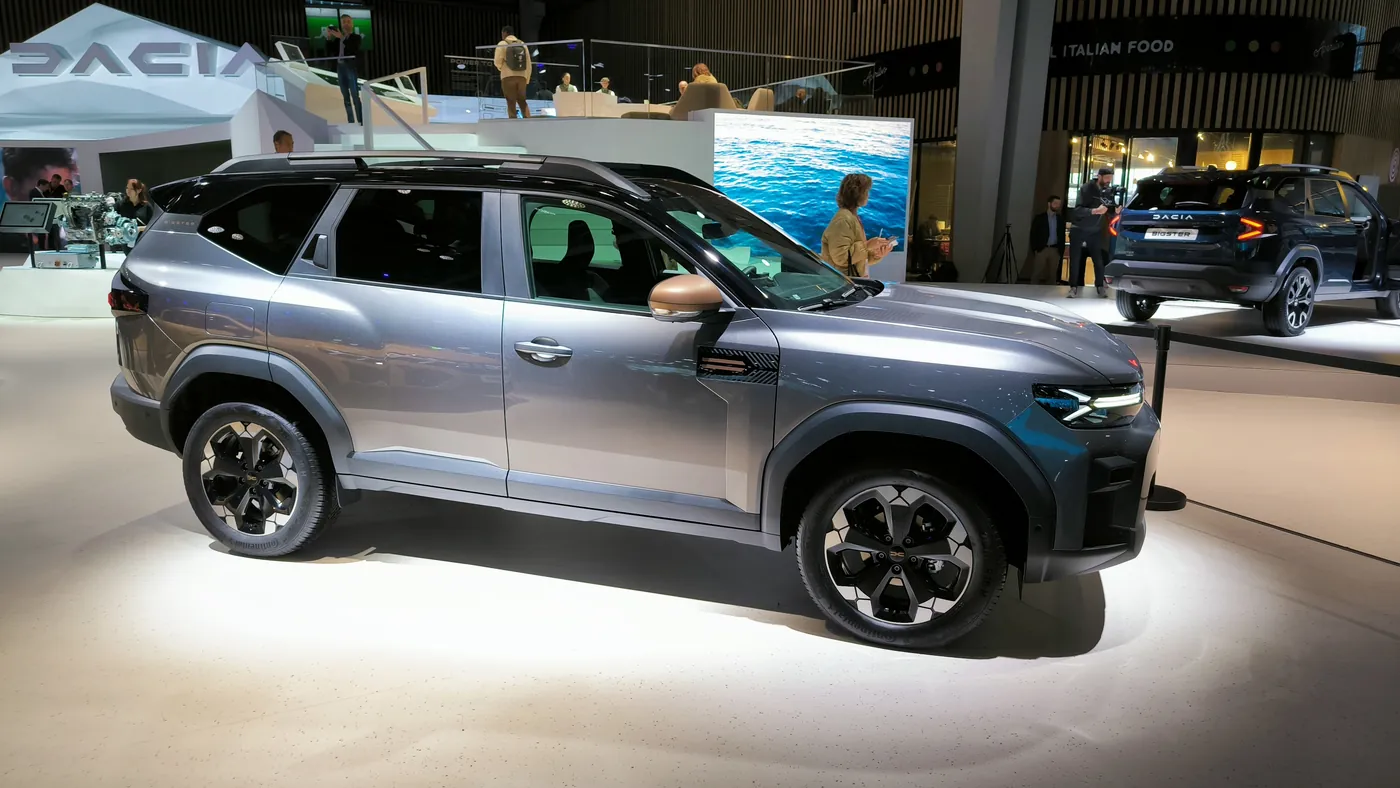
- 22 cm more length for the Bigster (4.57 m vs 4.34 m for the Duster), with a 677-litre boot versus 430 litres on the hybrid version.
- The Bigster Hybrid 155 delivers 155 hp vs 140 hp for the Duster Hybrid, with near-identical WLTP consumption around 5.1 l/100 km.
- Average price gap of around 3 000 euros between equivalent trims, especially relevant for families who need the extra rear space.
The Duster and the Bigster roll out of the same Romanian plant in Mioveni, share the CMF-B platform and most of their cabin. But the 22 extra centimetres and a boot multiplied by 1.5 reshuffle the cards at the dealership. To help decide between these two cars for individuals, here is a side-by-side look, then a direct verdict per use profile.
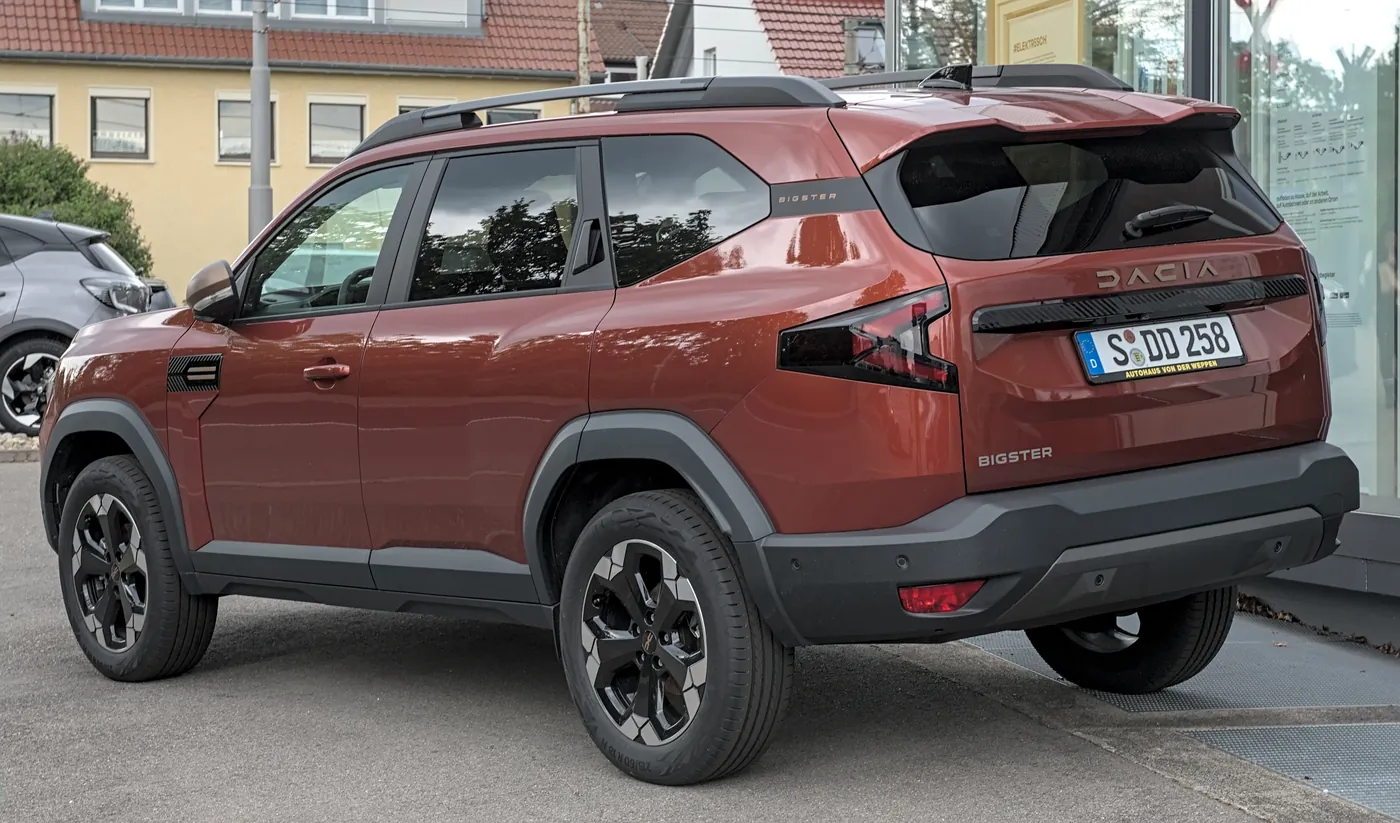
Bigster and Duster under the microscope
| Criterion | Dacia Duster 3 Hybrid 140 Journey | Dacia Bigster Hybrid 155 Journey |
|---|---|---|
| Length | 4 343 mm | 4 570 mm |
| Width | 1 813 mm | 1 813 mm |
| Height | 1 656 mm | 1 705 mm |
| Wheelbase | 2 657 mm | 2 706 mm |
| Rear knee room | Correct | Comfortable (+3 cm) |
| Boot (hybrid) | 430 litres | 677 litres |
| Boot (rear seats folded) | 1 265 litres | 1 977 litres |
| Ground clearance | 217 mm | 220 mm |
| Engine | 1.6 Hybrid 140 hp | 1.8 Hybrid 155 hp |
| Torque | 205 Nm | 172 Nm + 148 Nm elec. |
| 4x4 available | Yes (TCe 130) | No on hybrid |
| 0-100 km/h | 9.9 s | 9.7 s |
| Top speed | 170 km/h | 180 km/h |
| WLTP consumption | 4.8 l/100 km | 5.1 l/100 km |
| Real-world consumption | 5.5 to 6.0 l | 5.8 to 6.3 l |
| CO2 emissions | 109 g/km | 116 g/km |
| Tank | 50 litres | 50 litres |
| Theoretical range | ~1 040 km | ~980 km |
| Kerb weight | 1 385 kg | 1 502 kg |
| Towing capacity | 1 500 kg braked | 1 500 kg braked |
| Power tailgate | No | Yes standard |
| Climate | Single zone | Dual zone |
| Electric driver seat | No | Yes standard |
| Adaptive cruise | Option | Standard |
| Panoramic roof | N/A | Option 850 € |
| 19-inch alloys | N/A | Option 250 € |
| Journey price (March 2026) | 25 900 € | 28 900 € |
| 5-year TCO | 25 450 € | 27 670 € |
| 5-year depreciation | 50% (-12 950 €) | 50% (-14 450 €) |
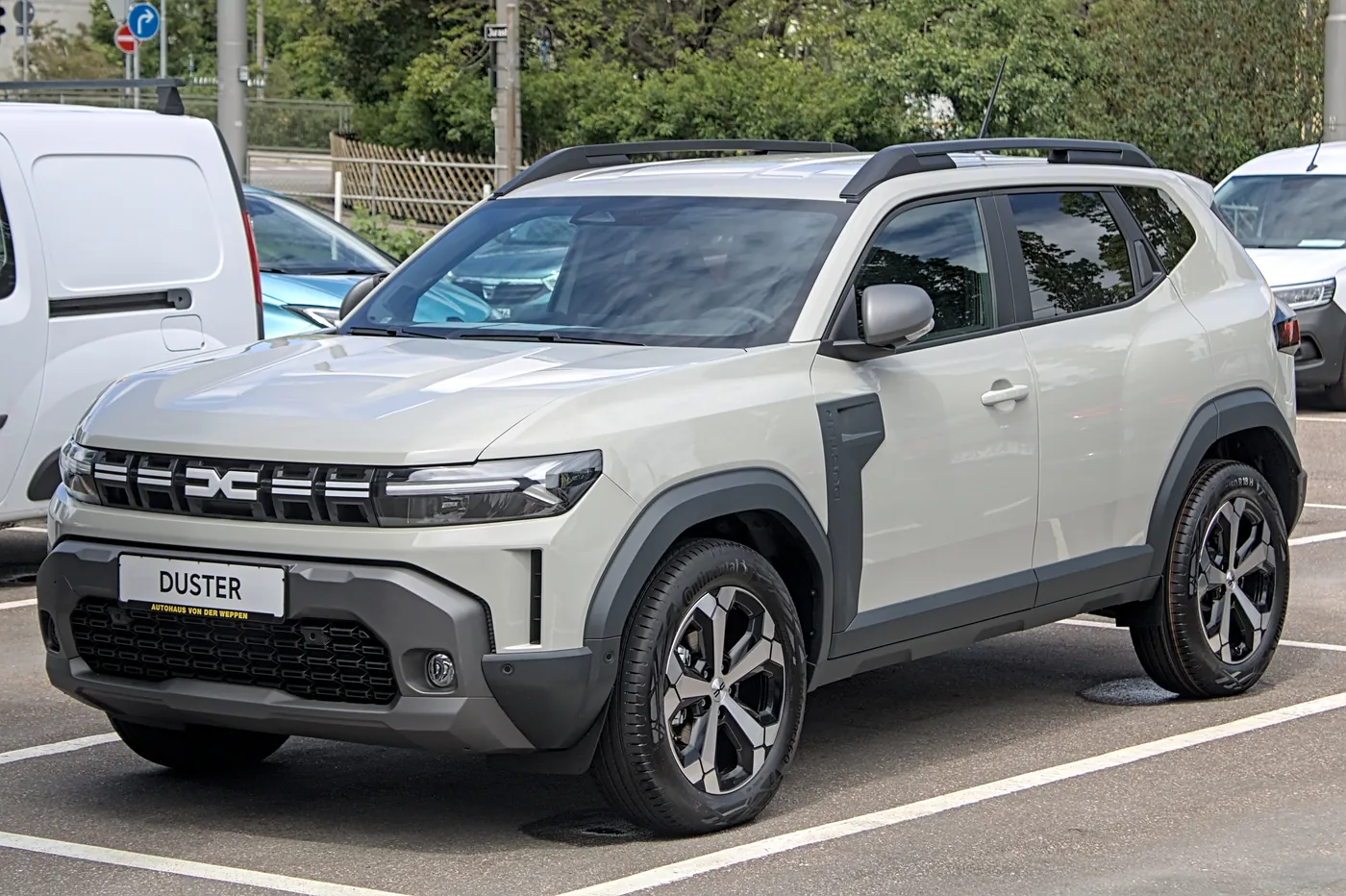
It all depends on what you need. The next table gives a direct verdict per use profile.
Who wins based on your needs?
| Main need | Suited model | Key reason |
|---|---|---|
| Family of 4-5, long trips | Bigster | 677 L boot + knee room + road comfort |
| Couple, all uses | Duster | Enough equipment, 3 000 € saved |
| Daily city commute | Duster | 4.34 m, easier in tight parking |
| Highway driver (+20 000 km/year) | Bigster | 155 hp, better stability |
| Tight budget, new | Duster Expression | From 24 900 € |
| Road + forest trail | Duster 4x4 | Only one with AWD |
| 2-year-old used | Duster 3 Hybrid 2024 | 19 000-22 000 €, bigger supply |
| Minimum fuel burn | Duster | 0.3 to 0.5 l/100 km less |
| Maximum standard equipment | Bigster Journey | Tailgate, dual-zone AC, elec. seat |
| 5-year resale | Bigster | Better residual value, rarer stock |
Bigster and Duster 3, two SUVs on the same platform
The Duster has dominated the compact SUV segment at Dacia since 2010, with over 2.2 million units sold in Europe across three generations. The Bigster’s arrival in 2025 shakes up this near-perfect model and raises a concrete dealership question: go for the big brother or stay loyal to the best-seller?
Both SUVs come out of the same Romanian Mioveni plant. CMF-B platform shared, hybrid powertrain shared, near-identical dashboard. At first glance, the Bigster looks like a Duster that grew up too fast. Except the 22 extra centimetres, the roomier boot and the reworked powertrain change the picture on plenty of concrete fronts.
A Bigster that extends the range
With the Bigster’s arrival in 2025, Dacia widens its range for families looking for more space. The Bigster, starting at 27 000 euros, offers an accessible alternative to established compact SUVs such as the Peugeot 3008, the Nissan Qashqai, the Renault Austral or the Hyundai Tucson.
Eight differences that truly separate Bigster from Duster
1. Twenty-two centimetres more length for the big brother
4.57 m for the Bigster, 4.34 m for the Duster. On a classic 5 m parking spot, both fit stress-free. Things get trickier in historic city centres and underground parking with tight spots. There, the 22 extra centimetres demand attention when parallel parking. The Duster stays the champion of city + periphery versatility.
In-dealership comparison on La chaîne Dacia: static walk-around of both models, focus on dimensions and equipment.
2. Three extra centimetres of rear knee room
Dacia put the focus here on the Bigster. Wheelbase gains 49 mm, translating to around 3 cm more rear knee room. In practice: three 1.80 m adults ride comfortably in the Bigster’s rear for a Paris-Marseille trip.
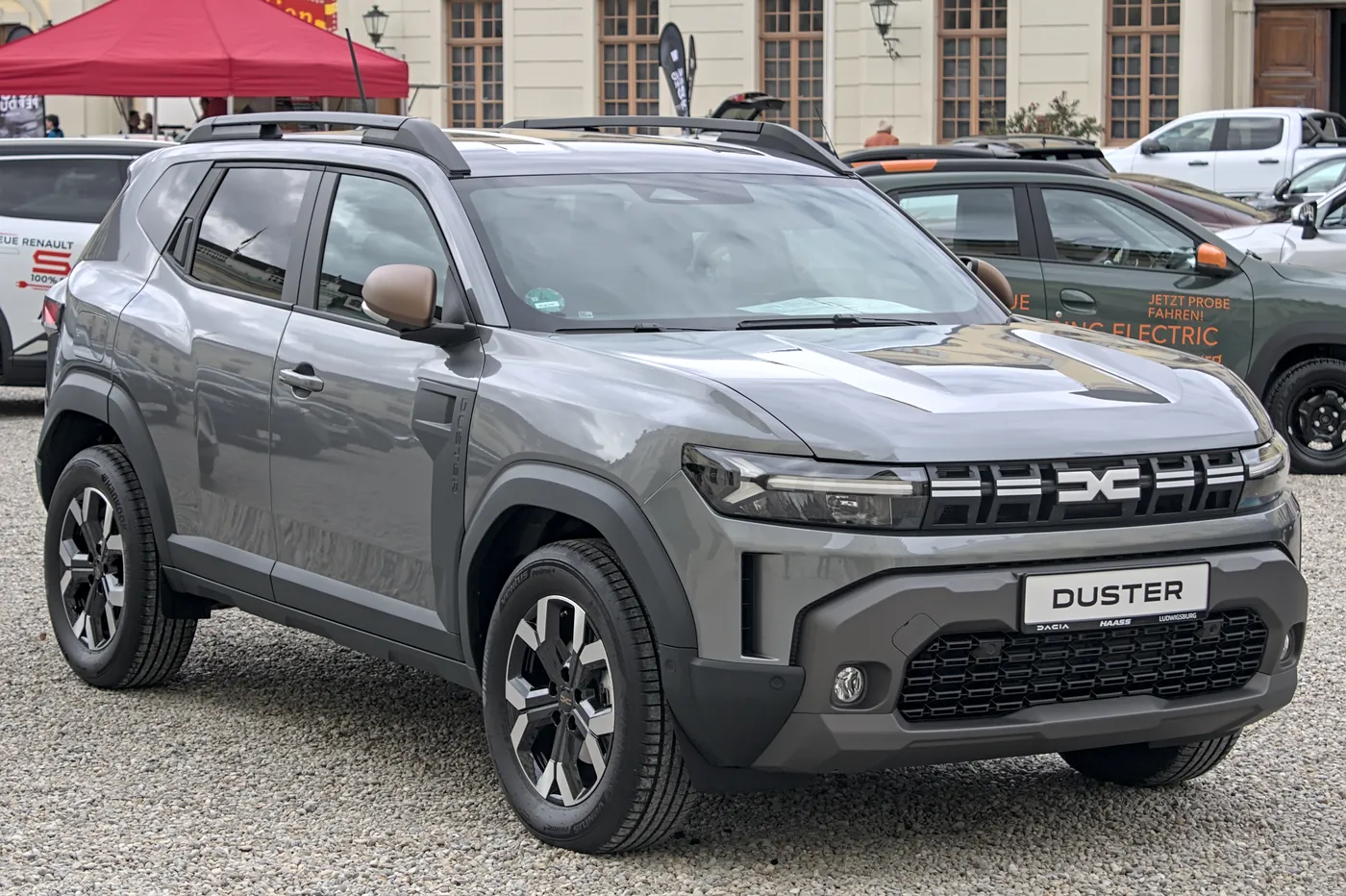
3. A boot multiplied by 1.5 on the hybrid version
This is the most visible difference. The Duster Hybrid tops out at 430 litres, with the E-Tech battery sitting under the floor. The Bigster Hybrid hits 677 litres without breaking a sweat. For a family going on two weeks of holiday with three kids, two suitcases, a pram and a dog, the question is settled. Rear seats folded, the Bigster gets close to 2 m3 of usable volume vs 1.26 m3 for the Duster.
4. Fifteen more horses under the Bigster’s hood
The Duster Hybrid 140 reuses the 1.6 petrol engine paired with two electric motors, with the dog-clutch gearbox inherited from the Renault Clio E-Tech. The Bigster runs a sturdier 1.8 reaching 155 hp combined. The 15 hp gap offsets the 117 kg weight penalty almost exactly. On hilly roads and highway overtakes, the Bigster breathes better.
5. A slightly thriftier Duster at the pump
WLTP figures: 4.8 l/100 km for the Duster and 5.1 l for the Bigster. In real-world driving, published tests by Caradisiac, Largus and Automobile-Magazine lean closer to 5.5 to 6.0 litres for the Duster and 5.8 to 6.3 litres for the Bigster. At 15 000 km per year and €1.80 per litre of petrol, that’s 60 to 80 euros of yearly gap. Nothing dramatic.
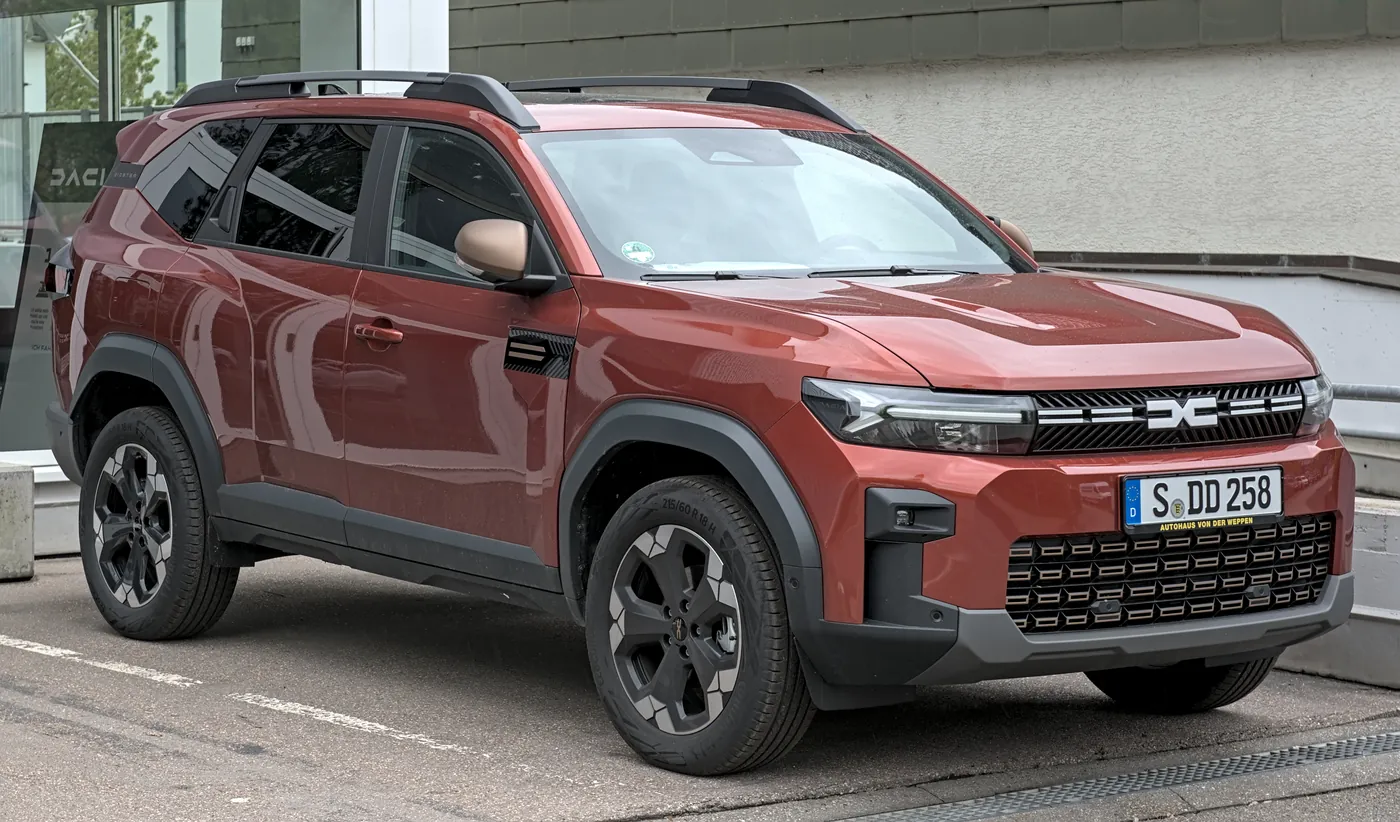
6. More generous standard equipment on the Bigster
The Bigster Journey lands with powered tailgate, electric driver seat, dual-zone climate, adaptive cruise control, refrigerated compartment under the armrest and rear vents. The Duster Journey offers essential, practical equipment at a price 3 000 euros lower.
7. Agility versus stability, two different characters
Longer and heavier, the Bigster is slightly more stable at high speed. Suspensions were retuned to absorb the extra mass. The Duster is the more agile of the two on mountain roads and back trails, an ideal pick for countryside or mid-mountain use.
Detailed road comparison with real-world consumption measurements.
8. Three thousand euros premium at catalogue
25 900 euros for the Duster Hybrid Journey. 28 900 euros for the equivalent Bigster. 3 000 euros gap at catalogue. In 36-month leasing with 10 000 km/year, that translates to a monthly bump of 40 to 50 euros.
Before signing, our complete used car buying guide details the checkpoints not to miss on this type of hybrid SUV.
The real 5-year budget for a Bigster or Duster
Estimate over 5 years and 75 000 km, based on Peugeot France pricing March 2026 and 2026 Argus used-market ratings.
| Item | Duster Hybrid Journey | Bigster Hybrid Journey |
|---|---|---|
| Purchase price | 25 900 € | 28 900 € |
| Registration (average region) | 400 € | 420 € |
| 5-year insurance (average profile) | 3 500 € | 3 800 € |
| Fuel (75 000 km) | 5 400 € | 5 700 € |
| Servicing + tyres | 3 200 € | 3 300 € |
| 5-year depreciation (50% residual) | -12 950 € | -14 450 € |
| Total 5-year cost | 25 450 € | 27 670 € |
Over 5 years, the real gap between the two Dacias drops to around 2 200 euros, or 37 euros per month. Far less than the 3 000 euros catalogue gap thanks to better Bigster residuals.
Which to choose based on your profile
For a family with children
The Bigster is the natural fit. The 3 extra cm of knee room, the XXL boot and the 155 hp engine transform the holiday road trip. A family with two kids, a double pram, a mid-sized dog and a few sports bags finds its spot without playing Tetris in the boot. For larger families (5+), see our hybrid 7-seater car ranking.
For a couple without children
The Duster is the smart pick. The Duster Hybrid already offers plenty of room for two plus generous travel luggage, stays more manageable and costs less. The obvious advice: keep the 3 000 euros for something else (a trip, winter tyres, a roof rack).
For mostly urban driving
The Duster takes the lead. More compact footprint, better peripheral visibility on narrow streets, calmer underground parking.
For highway commuters
Close match but the Bigster edges ahead. More torque for overtakes, quieter cabin, steadier at 130 km/h. Above 20 000 km/year, the extra running cost is amortised quickly.
On a tight budget
Head straight for the Duster Expression Hybrid at 24 900 euros. Very attractive value in Dacia’s range.
For mixed road and trail use
The Duster takes the lead back, mainly thanks to its 217 mm ground clearance and its compact footprint. The TCe 130 4x4 version is only offered on the Duster in 2026.
The Bigster and Duster Hybrid reliability outlook
The hybrid technology comes from the Renault E-Tech family, deployed since 2020 on Clio, Captur and Arkana. Five years of hindsight let us draw first conclusions. Renault hybrid customer feedback is broadly positive: few major faults reported on the hybrid system itself, and real-world consumption within 10-15% of factory claims.
The Duster’s 1.6 Hybrid: a proven base
The 1.6 petrol engine paired with the E-Tech dog-clutch gearbox has been in service since 2020. The E-Tech hybrid system benefits from regular software updates that keep refining driving smoothness.
The Bigster’s 1.8 Hybrid: a newer engine
The Bigster’s 1.8 Hybrid 155 is newer, commercialised in 2024. Early feedback is reassuring, and it uses the same E-Tech architecture.
For comparisons in the same segment, see also Peugeot 3008 vs 5008.
Frequently asked questions
Is the Bigster really just a stretched Duster?
Yes and no. Both share the CMF-B platform and most of the cabin. But the Bigster gains 227 mm in length, uses a 1.8 hybrid engine instead of the 1.6, and has retuned suspensions. The relationship is closer to Golf and Tiguan than to true twins.
Which Dacia for a family of 5?
The Bigster. Its 49 mm extra wheelbase, 677-litre boot and rear habitability make it the obvious pick for five-person long trips.
What's the real price gap between Duster and Bigster?
In equivalent Hybrid Journey trim, 3 000 euros catalogue gap (25 900 vs 28 900 euros in March 2026). In 5-year TCO, the gap drops to around 2 200 euros thanks to better Bigster residuals.
Does the Bigster use much more fuel than the Duster?
No, the gap stays marginal. 4.8 vs 5.1 litres per 100 km WLTP. Real-world: plan 0.3 to 0.5 litre more for the Bigster, i.e. 60 to 80 euros per year for 15 000 km.
Is the Bigster available with 4x4?
Not yet in hybrid form in 2026. Only the 140 hp mild-hybrid petrol gets all-wheel drive. For 4x4 buyers, the Duster stays more versatile with TCe 130 4x4 and Eco-G 100 4x4 (LPG) versions.
What reliability should we expect from these Dacia hybrids?
The tech comes from Renault E-Tech, deployed since 2020 on Clio, Captur and Arkana. Feedback over three years is good with few major faults. The Duster’s 1.6 hybrid has proven itself. The Bigster’s 1.8 is newer but uses the same architecture.
Can we tow a caravan with the Bigster or Duster?
Yes for both, but with different capacities. The Duster Hybrid tows up to 750 kg unbraked and 1 500 kg braked. The Bigster Hybrid also reaches 1 500 kg braked. For a classic 1 000 to 1 300 kg caravan, both fit.