

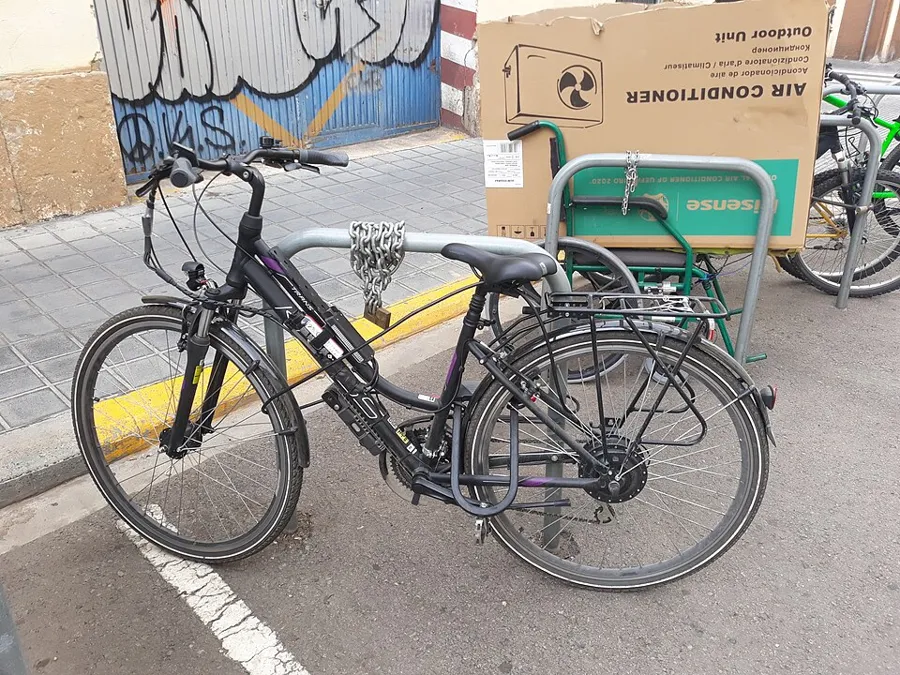
The electric bike has settled into French households, and one question comes up with every purchase: does it need insurance? The answer hinges on a distinction many sellers forget to mention: it all depends on the speed at which the assistance cuts off. Below 25 km/h, nothing is imposed. Above it, the bike changes legal category, and obligations. Then comes the real subject, theft, by far the urban cyclist’s first risk.
Electric bike insurance: the essentials
- No insurance is mandatory for a pedelec whose assistance cuts off at 25 km/h.
- The 45 km/h speedbike is classed as a moped: third-party liability, registration and helmet are mandatory.
- Home insurance liability generally covers damage caused while riding a pedelec.
- Against theft, expect 4 to 15 euros per month, with a certified FUB or SRA lock required.
Is insurance mandatory for an electric bike?
A standard pedelec only assists while pedalling, and its motor cuts off at 25 km/h. In the eyes of the French highway code, it remains a cycle, exactly like a muscle-powered bike. The direct consequence, confirmed by Service-Public.gouv.fr: no insurance is mandatory to ride one.
The speedbike pushes assistance up to 45 km/h. It falls into the moped category, with everything that entails: mandatory third-party liability of the motorised two-wheeler type, registration, and a homologated helmet. Riding a speedbike without insurance is a standard uninsured-vehicle offence, punishable by a fine of up to 3,750 euros, exactly as for a scooter. Its insurance actually looks more like motorised two-wheeler insurance than a bike policy.
| Pedelec (25 km/h) | Speedbike (45 km/h) | |
|---|---|---|
| Legal category | Cycle | Moped |
| Liability insurance | Optional | Mandatory |
| Registration | No | Yes |
| Helmet | Recommended | Homologated, mandatory |
| Minimum age | None | 14 (AM licence depending on birth year) |
Not mandatory does not mean not useful
Even on a pedelec, the rider’s liability is engaged the moment they cause an accident. One knocked-over pedestrian, one scratched car door, and the sums at stake quickly exceed several thousand euros. That is why the question deserves asking even when the law imposes nothing. The good news: the third-party liability included in home insurance generally covers these situations for a cycle. A call to the insurer settles it in two minutes, and it is the first thing to do after buying.
What home insurance does not cover, however, is the bike itself. A quality e-bike commonly costs 1,500 to 3,500 euros, sometimes more: our guide to the best electric bikes shows it well. At that value, theft cover deserves the same attention as it would for a scooter.
Bike theft, the urban cyclist’s real subject
Bike theft affects several hundred thousand owners in France every year, and e-bikes are the preferred targets: high value, easy resale, and a battery that sells separately. A dedicated theft and damage policy costs between 4 and 15 euros per month depending on the bike’s value and the extent of cover.
Three conditions appear in almost every contract, and ignoring them voids compensation:
- a certified lock (FUB or SRA standard), whose invoice may be required;
- the bike attached by its frame to a fixed point, even for two minutes;
- the bike’s purchase invoice, to be kept safe.
Bicycode marking, mandatory on new bikes sold by professionals in France, completes the setup: it does not replace the lock, but it multiplies the chances of recovering a stolen bike and simplifies the insurer’s work. Some policies also cover the battery alone, the most coveted part.
What types of policies exist to insure an electric bike?
In practice, three broad families of offers coexist to insure an electric bike, and they do not cover the same things.
The home insurance extension adds the bike to the covered belongings, sometimes with theft cover limited to the home. The dedicated bike policy, offered by cycle-focused insurers and some large mutual insurers, combines theft, damage, assistance and, depending on the plan, rider cover that compensates an injured cyclist after an accident, even with no identified third party. Finally, for speedbikes, motorised two-wheeler insurers take over: in France, La Mutuelle des Motards, for instance, offers contracts specific to 45 km/h bikes that mainstream bike insurers often refuse to cover.
Before taking out a policy, three checks matter in the contract: the payout ceiling (some offers stop at 1,000 euros, below the price of most e-bikes), cover for the battery, regularly excluded although it represents a third of the bike’s value, and night-time storage conditions. When the bike serves daily commutes, theft cover that excludes daytime street parking empties the contract of its purpose.
How to choose: home extension or dedicated bike policy?
Two routes exist for most cyclists. The home insurance extension costs a few euros a month and often covers theft, but with limited payout ceilings and sometimes an exclusion for theft away from home. The dedicated bike policy costs more, but covers street theft, riding damage, and often includes assistance for a breakdown more than a few kilometres from home.
The choice comes down to the bike’s value. Below 800 euros, the home extension, or no cover at all, is defensible. Above 1,500 euros, the dedicated policy becomes hard to avoid: one night outside with a budget lock can cost ten years of premiums. In between, comparing offers comes down to ceilings, deductibles and night-time exclusions, which vary widely between contracts. Good policies show one telling detail: they compensate at new-for-old value for at least two years, while the others apply depreciation from the bike’s first birthday.
For urban journeys the logic applies to every electric vehicle: the electric scooter, for its part, is subject to mandatory third-party liability insurance in France, something many riders discover after the accident.
Frequently asked questions
Is insurance mandatory for an electric bike?
Not for a standard pedelec whose assistance cuts off at 25 km/h: it belongs to the cycle category, with no insurance obligation in France. It becomes mandatory for a speedbike assisting up to 45 km/h, which is classed as a moped: specific third-party liability, registration and a homologated helmet are then required.
Does my home insurance liability cover my e-bike?
Generally yes, for damage you cause to others while riding a pedelec limited to 25 km/h. A call to your insurer confirms it. However, that cover includes neither theft of the bike, nor damage to it, nor your own injuries: those protections require a dedicated bike policy.
How much does electric bike insurance cost?
Expect between 4 and 15 euros per month depending on the bike’s value and the chosen cover. Theft-only cover for a 2,000-euro e-bike sits at the low end; a theft, damage and assistance package for a high-end model approaches the top. Some home insurance policies also offer a cheaper bike extension, though often with low payout ceilings.
What do insurers require to cover bike theft?
Almost all require a certified lock (FUB or SRA standard), the purchase invoice, and the bike attached by its frame to a fixed point. Bicycode marking, already mandatory for new bikes sold by professionals in France, helps recover stolen bikes. A theft without a certified lock is almost always excluded from compensation.
Can a 45 km/h speedbike be insured like a pedelec?
No. A speedbike is classed as a moped: it requires specific third-party liability insurance of the motorised two-wheeler type, registration and a homologated helmet. Riding a speedbike uninsured carries the same penalties as an uninsured scooter, up to a 3,750-euro fine.