
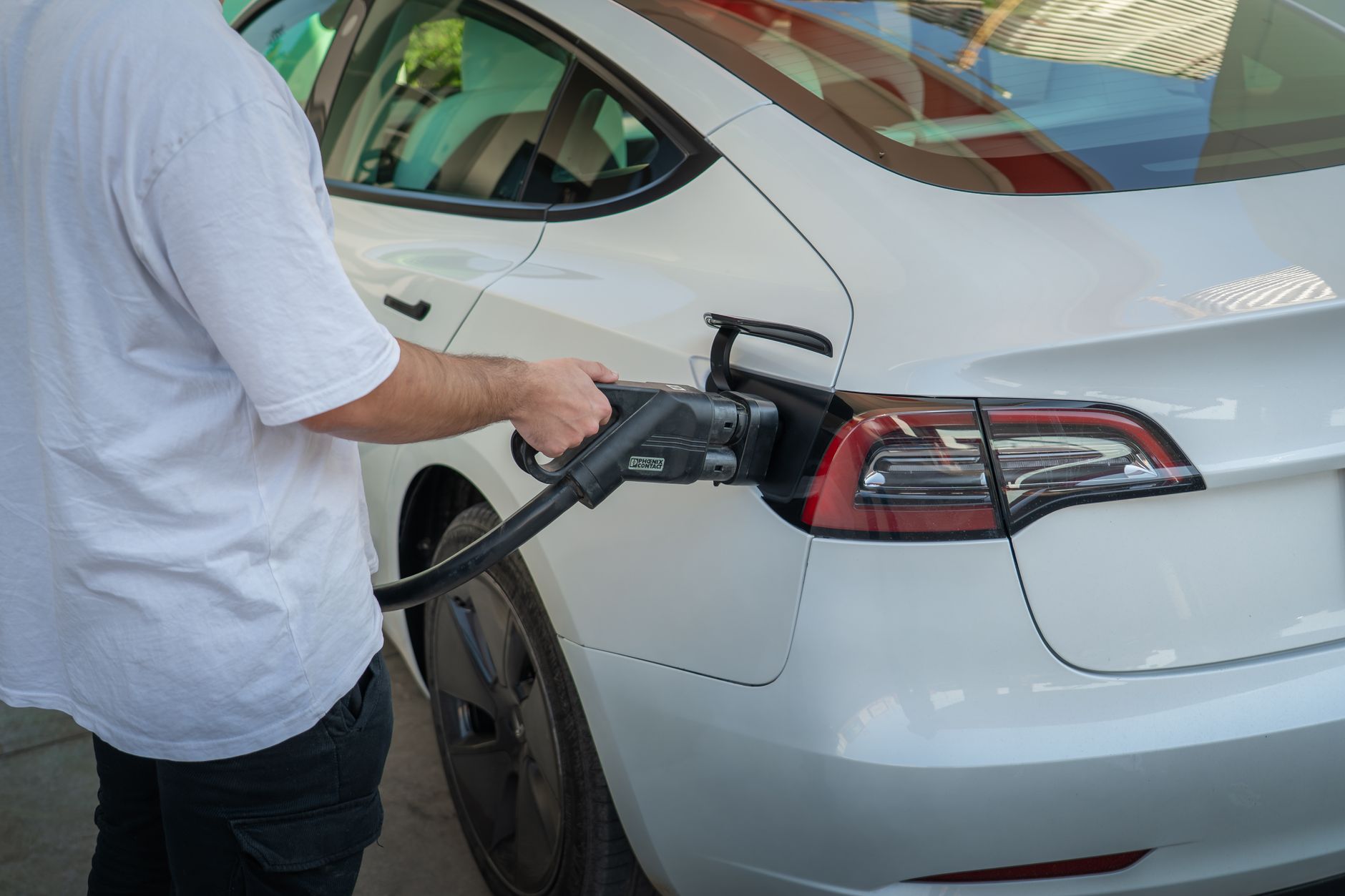
Between the eco-bonus turned “coup de pouce premium”, social leasing and the new grant for used cars, the landscape of grants for buying an electric car has changed in 2026. Amounts vary with household income, the price of the vehicle and where it is manufactured, and some schemes cannot be combined with one another.
Electric car purchase grants: the essentials
- The coup de pouce premium can reach 5,700 euros, plus 1,200 to 2,000 euros if the battery is manufactured in Europe.
- Social leasing caps the monthly payment at 200 euros, for households with a reference tax income per unit no higher than 16,880 euros.
- A grant for used cars, with no income condition, has existed since September 1, 2026.
- National grants do not all combine: the coup de pouce premium and social leasing are mutually exclusive.
Grants for buying an electric car in 2026
| Grant | Amount | Main conditions |
|---|---|---|
| Coup de pouce premium (former eco-bonus) | Up to 5,700 euros, + 1,200 to 2,000 euros for a European battery | New, fully electric vehicle, price ≤ 47,000 euros including tax, weight ≤ 2.4 t, reference tax income |
| Social leasing | Monthly payment capped at 200 euros, grant up to 9,500 euros | Reference tax income per unit ≤ 16,880 euros, professional use of the vehicle, weight < 1,800 kg |
| Used car grant | Varies by operator, roughly 2,000 euros top-up for home-care workers | Fully electric vehicle registered between 2017 and 2023, battery ≥ 80% of capacity, 3-year holding period |
| Clean vehicle microloan | Up to 8,000 euros over 7 years | Lower-income households, excluded from conventional bank credit |
These amounts depend on the rules in force when the request is made: they change every year and should be checked with the operator or the dealer before any commitment.
The coup de pouce premium: amount and conditions
Since July 2025, the former eco-bonus funded directly by the state has been replaced by the coup de pouce premium, funded through energy-saving certificates (CEE): it is energy suppliers, not the state budget, that now cover it.
Its amount depends on the household’s reference tax income per unit:
- 5,700 euros for low-income households;
- 4,700 euros for moderate-income households;
- 3,500 euros for other households.
A top-up of 1,200 to 2,000 euros is added when the vehicle’s battery is manufactured in Europe. These amounts remain indicative: unlike a standard state grant, energy-saving certificates are traded on a market whose value fluctuates, which can make the premium vary depending on the period and the partner chosen.
On the vehicle side, the premium covers new M1-category cars (up to 8 seats), fully electric or hydrogen-powered, registered in France, priced under 47,000 euros including tax, weighing less than 2.4 tonnes, with a sufficient environmental score as calculated by Ademe.
Who can get it: income and vehicle conditions
For the coup de pouce premium, the beneficiary must be an adult, resident in France, and must not have already received the same bonus for the same vehicle category within the past three years. The vehicle itself must not be resold within the year following its invoicing, nor before reaching 6,000 kilometres.
The reference tax income per unit, shown on the latest tax notice, directly determines the amount a household can claim. The same vehicle conditions apply to professionals, provided they can show a registered business in France.
Social leasing: an electric car from 100 euros a month
Social leasing lets lower-income households lease a new electric car with a limited, or even non-existent, initial down payment. Renewed for a third edition starting July 16, 2026, it remains funded through energy-saving certificates.
For the 2026 edition, two cumulative criteria apply: a reference tax income per unit that does not exceed 16,880 euros, and professional use of the vehicle (living more than 10 km from the workplace, or driving more than 8,000 km a year for work). Households that already benefited from the scheme in 2024 or 2025 cannot use it again this year.
The monthly payment is capped at 200 euros, with no down payment, for 15,000 km of included mileage per year. The grant covers 29% of the vehicle’s purchase cost, up to a limit of 6,500 euros, raised to 9,000 euros if the vehicle and its battery are manufactured in the European Economic Area, and up to 9,500 euros if the electric motor is too. Only new, fully electric models, with a running weight below 1,800 kg, are eligible.
The grant for a used electric car
Since September 1, 2026, a specific grant has completed the scheme for buying or leasing a used electric car. According to service-public.fr (news item dated August 18, 2026, updated on September 2, 2026), it is also funded through energy-saving certificates, but targets a wider audience: no income condition applies.
To qualify, the vehicle must be fully electric (hybrids are excluded), first registered in France between January 1, 2017 and December 31, 2023, and bought or leased from an approved car dealer. Its battery must retain at least 80% of its original capacity, or a remaining range of at least 200 km or 80% of the range stated at homologation. The vehicle must then be kept for at least three years, or leased for a minimum term of three years.
The amount depends on the operator chosen. A top-up of roughly 2,000 euros per vehicle is available for home-care and personal-service workers, provided the vehicle costs no more than 25,000 euros including tax, battery included, and weighs less than 1,800 kg; this top-up only applies to orders placed before January 1, 2027 and delivered before July 1, 2027. The scheme is capped at five used electric cars per beneficiary. For the practical steps of buying, see our guide to buying a used car.
Local grants and the clean vehicle microloan
On top of national schemes, some local authorities, sometimes co-funded by the European Union, offer their own grants for buying an electric vehicle. Amounts and conditions vary from one region to another, which makes it worth checking the local offer before signing.
The clean vehicle microloan is aimed at the lowest-income households, in particular those excluded from conventional bank credit, who want to buy or lease a new or used low-emission vehicle. Its amount can reach 8,000 euros, repayable over a maximum of seven years, and varies with the applicant’s income.
Can several grants be combined?
In most cases, the coup de pouce premium can be combined with a local grant offered by a local authority. However, the coup de pouce premium and social leasing cannot be combined: buyers must choose one or the other depending on their situation.
Other financing solutions, such as a zero-interest loan for an electric vehicle in some areas, can complete the package. To cut the total cost of ownership beyond the purchase grant, the choice between buying and leasing and keeping track of charging costs matter just as much as the initial grant.
How to apply
For the coup de pouce premium, the request must be made before signing the order form. In most cases, the dealer handles it directly when working with a partner energy supplier: the grant is then deducted from the vehicle’s price, or from the first lease payment. It is also possible to apply directly to an energy supplier that has signed the “coup de pouce” charter.
For social leasing, eligibility is tested online before contacting a partner dealer. For the used car grant, the process goes through the approved car dealer selling or leasing the vehicle.
Choosing the right vehicle for your budget
Once the right grant has been identified, choosing the vehicle itself still shapes the final budget. A model’s real-world range often drives the size of its battery, and therefore its price. For a first purchase, our selection of the most affordable electric cars helps target models whose price stays under the ceiling set by national grants.
Frequently asked questions
How much is the coup de pouce premium for an electric car in 2026?
The coup de pouce premium, which replaced the state-funded eco-bonus in July 2025, can reach 5,700 euros for low-income households, 4,700 euros for moderate-income households, and 3,500 euros for other households, based on the household’s reference tax income per unit. A bonus of 1,200 to 2,000 euros is added when the vehicle’s battery is manufactured in Europe.
Who can get a grant for buying an electric car?
For the coup de pouce premium, the buyer must be an adult resident in France, and must not have already received the same bonus for the same vehicle category within the past three years. The vehicle must be new, fully electric, cost less than 47,000 euros including tax, and weigh less than 2.4 tonnes.
Is there a grant for buying a used electric car?
Since September 1, 2026, a grant covers the purchase or lease of a fully electric car first registered in France between 2017 and 2023, with a battery that retains at least 80% of its original capacity. No income condition applies, but the vehicle must be kept, or leased, for at least three years.
Can several grants for an electric car be combined?
The coup de pouce premium can be combined with local grants offered by some local authorities, but it cannot be combined with social leasing. Social leasing remains a separate scheme, designed specifically for the lowest-income households.
Is social leasing limited to new electric cars?
Yes. Social leasing only covers new electric cars, with a running weight below 1,800 kg for the 2026 edition. It is aimed at households whose reference tax income per unit does not exceed 16,880 euros, provided the vehicle is used for professional purposes.